Concrete Polishing
From Slab
to Shine.
Dull, dusty concrete worked down to a mirror-wet sheen. Warehouse floors, barn conversions, farmhouse kitchens — brought back to the bone of the building.
across 6 states
every single job
Instant ballpark estimate · No commitment
The 5-Stage Process
No shortcuts.
No exceptions.
Scroll through the actual process. Each stage deepens the sheen — the page itself transforms as the floor does.
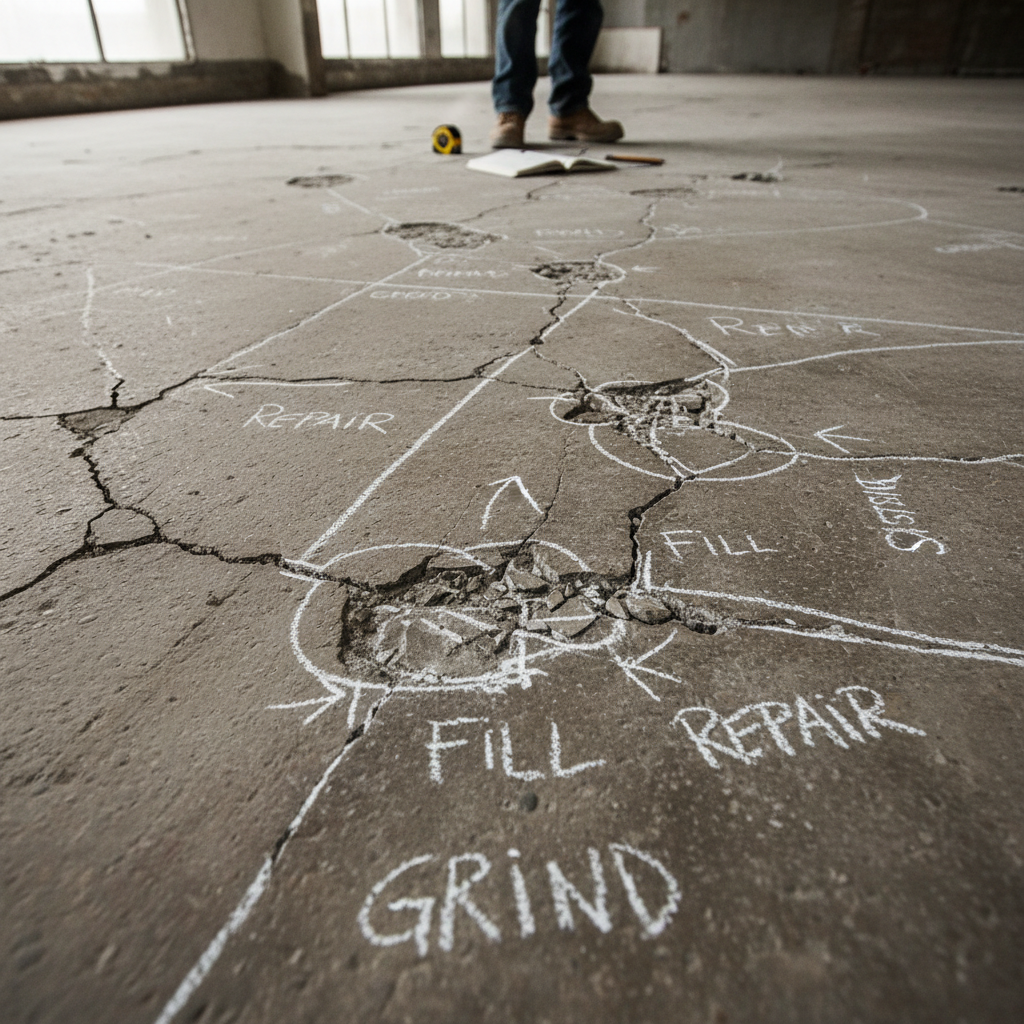
We read the floor before we touch it.
Every slab has a history — cracks from settling, ghost lines from old equipment, coatings that were never meant to last. We document every inch, fill structural cracks with epoxy injection, grind down high spots, and mark zones that need special attention. Nothing gets skipped because shortcuts show up in the final shine.
What happens
Surface assessment · Crack injection · Coating removal · Moisture testing
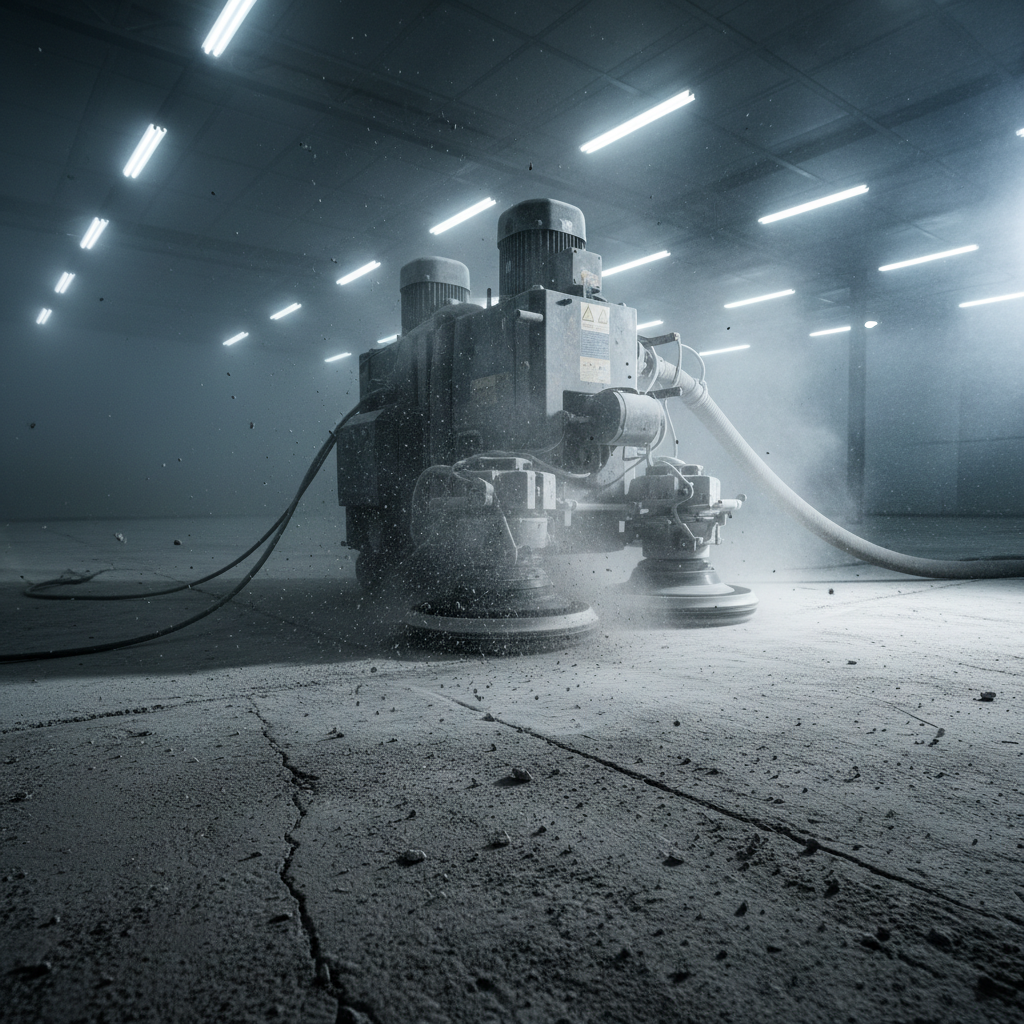
The diamonds do the heavy work.
30-grit metal-bond diamond segments cut into the surface like a plane taking rough timber. They flatten high spots, open the pores of the concrete, and expose the aggregate skeleton beneath. The floor looks worse before it looks better — chalky, scratched, raw. That's exactly right. You're meeting the real floor for the first time.
What happens
30-grit metal bond · Planetary head passes · Dust extraction · Aggregate exposure
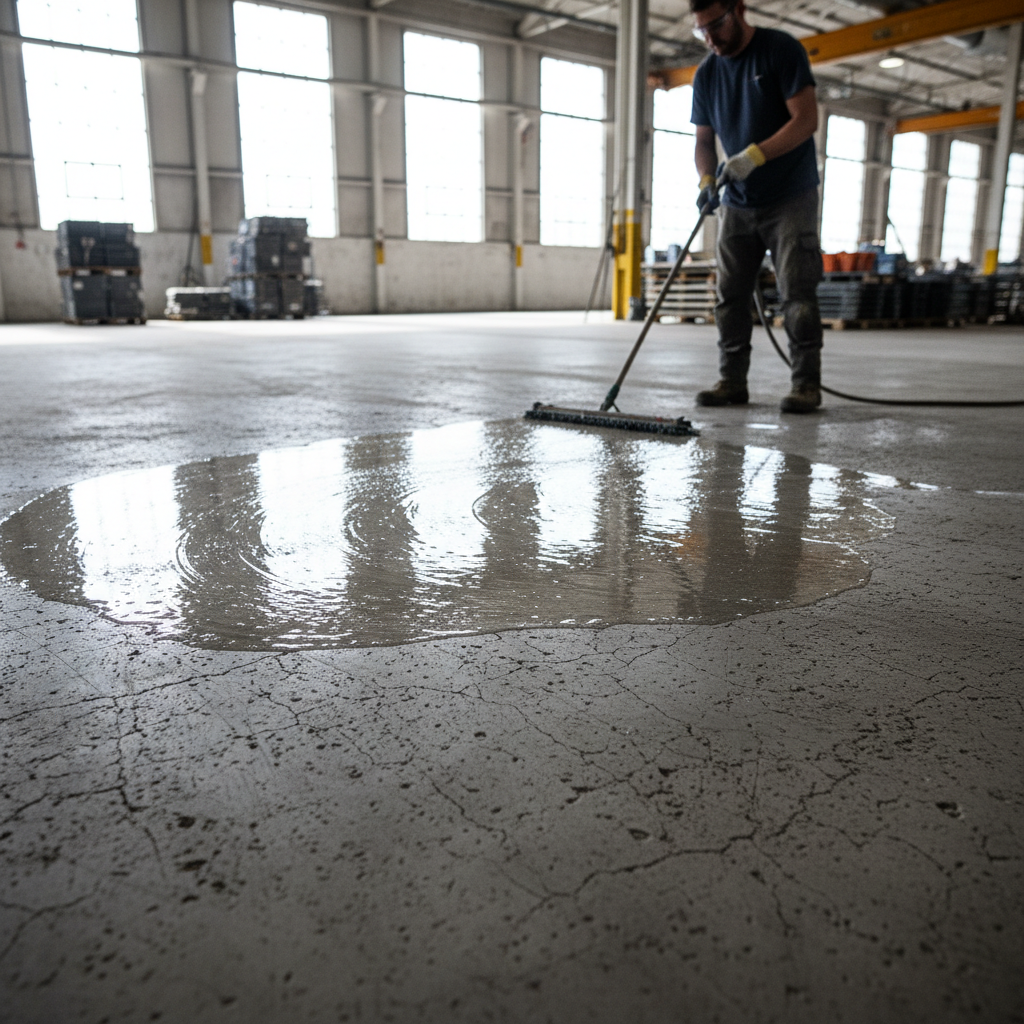
The floor drinks, then hardens from within.
Lithium silicate densifier penetrates the open pores and reacts with the free calcium in the concrete — a chemical process that fills the microscopic voids with a silica gel that becomes harder than the original slab. This isn't a coating. It's a transformation of the material itself. The floor that emerges is denser, less porous, and dramatically more resistant to impact and staining.
What happens
Lithium silicate application · 4-hour cure · Hardness increase: 40% · Stain resistance activated
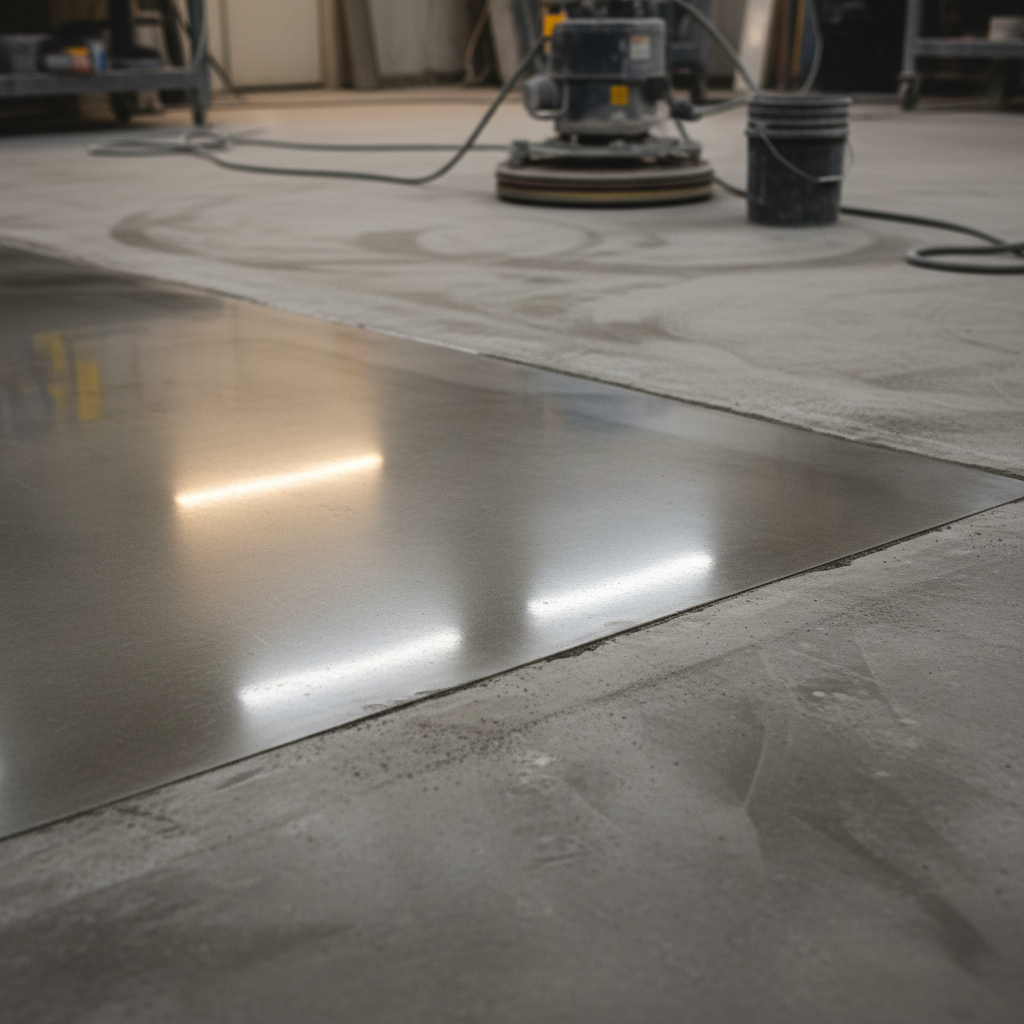
Patience is the whole point of this stage.
We work through resin-bond pads in sequence — 200, 400, 800 — each pass removing the scratches left by the last. Under raking light you can see the surface clarify in real time: the cloudy haze of the 200 grit giving way to a satin sheen at 400, then the first suggestion of depth at 800. This is where most polishers rush. We don't.
What happens
200 → 400 → 800 resin bond · Cross-directional passes · Wet-check at each stage · Edge detail work
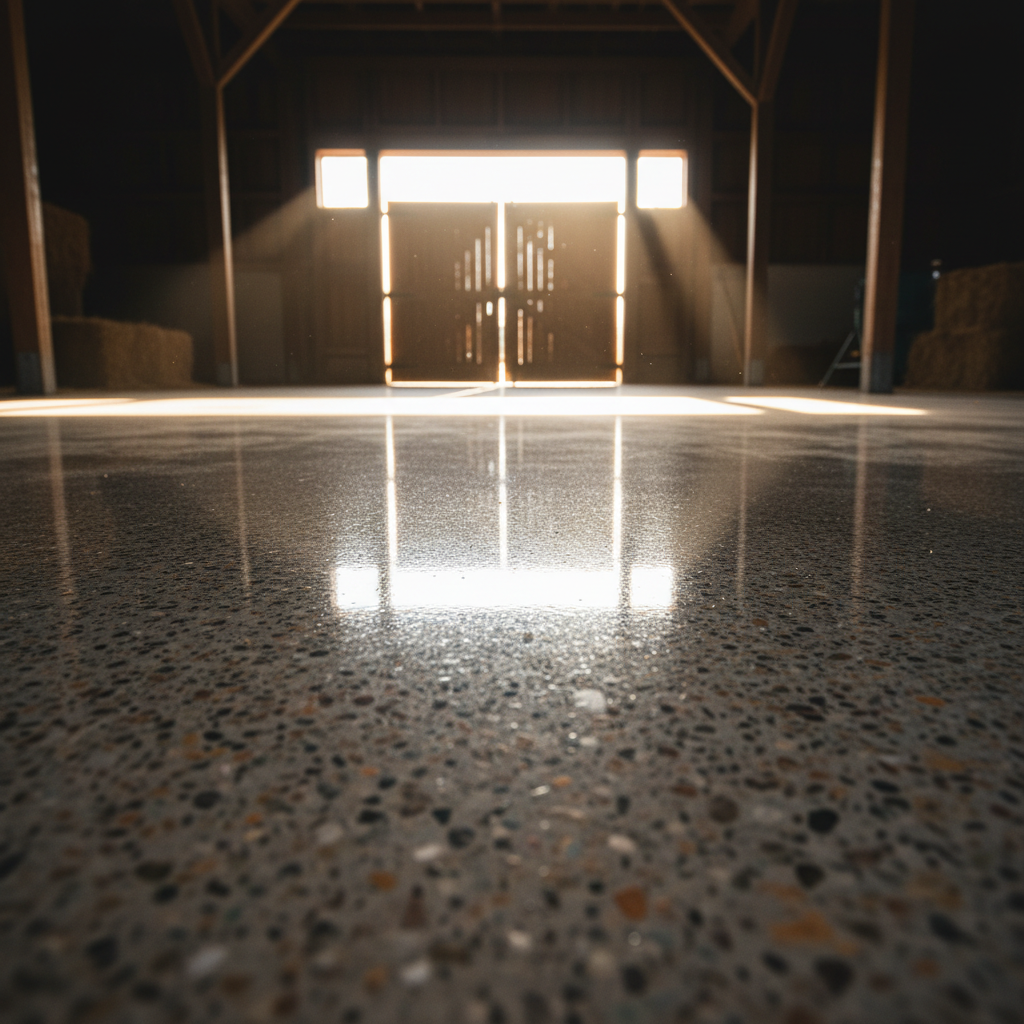
The moment you can see your boots in the floor.
High-speed burnishing with a 3000-grit composite pad generates heat that draws the last of the silica to the surface — this is the moment the floor goes from satin to liquid. A penetrating guard sealer (not a topcoat) locks the surface without adding a film layer, so the floor stays breathable, repairable, and authentic. What you're left with is concrete at its best: cool, impossibly smooth, alive with aggregate.
What happens
1500 → 3000-grit burnish · Penetrating sealer · 48-hour cure · Final inspection walk
Where We Work
Your kind of space.
Our kind of work.
From 200-square-foot farmhouse kitchens to 40,000-square-foot processing facilities.
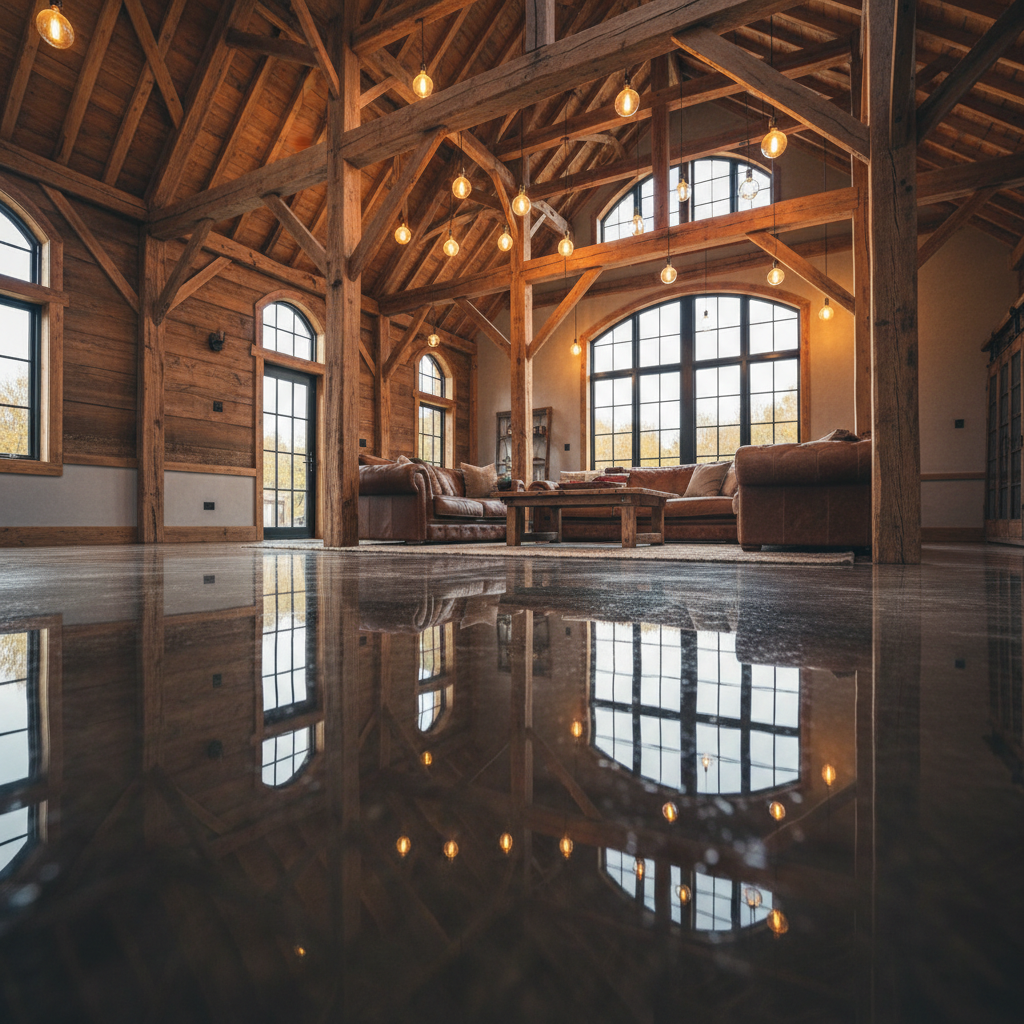
Outbuildings turned Airbnbs.
Hobby farmers are discovering that a polished concrete floor is the fastest way to make a dairy barn feel like a $400/night stay. Durable enough for guests who don't take their boots off. Beautiful enough for the photos that fill your calendar.
180+ barn floors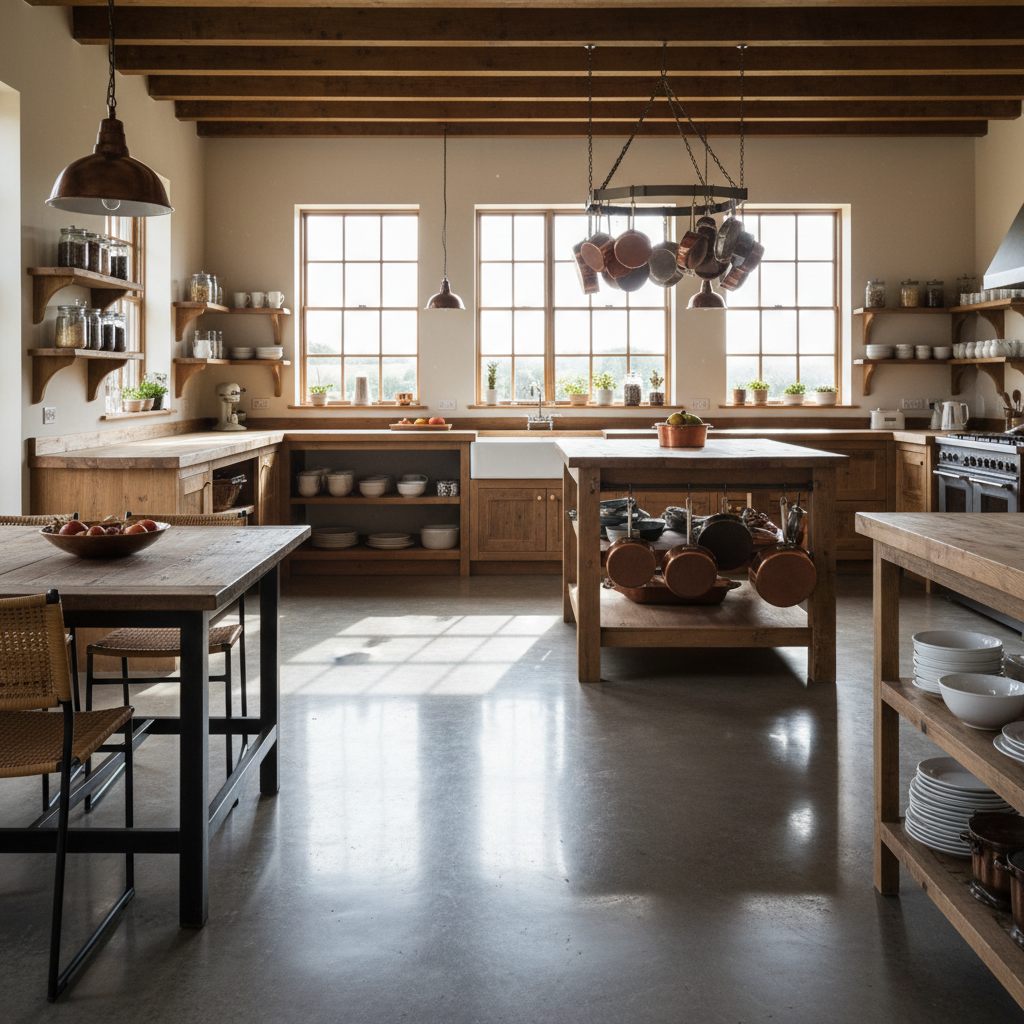
Built for cast iron and muddy dogs.
A polished slab handles dropped cookware, wet paws, and daily farm life without flinching. Easier to clean than tile, warmer underfoot than you'd expect.
92 kitchen floors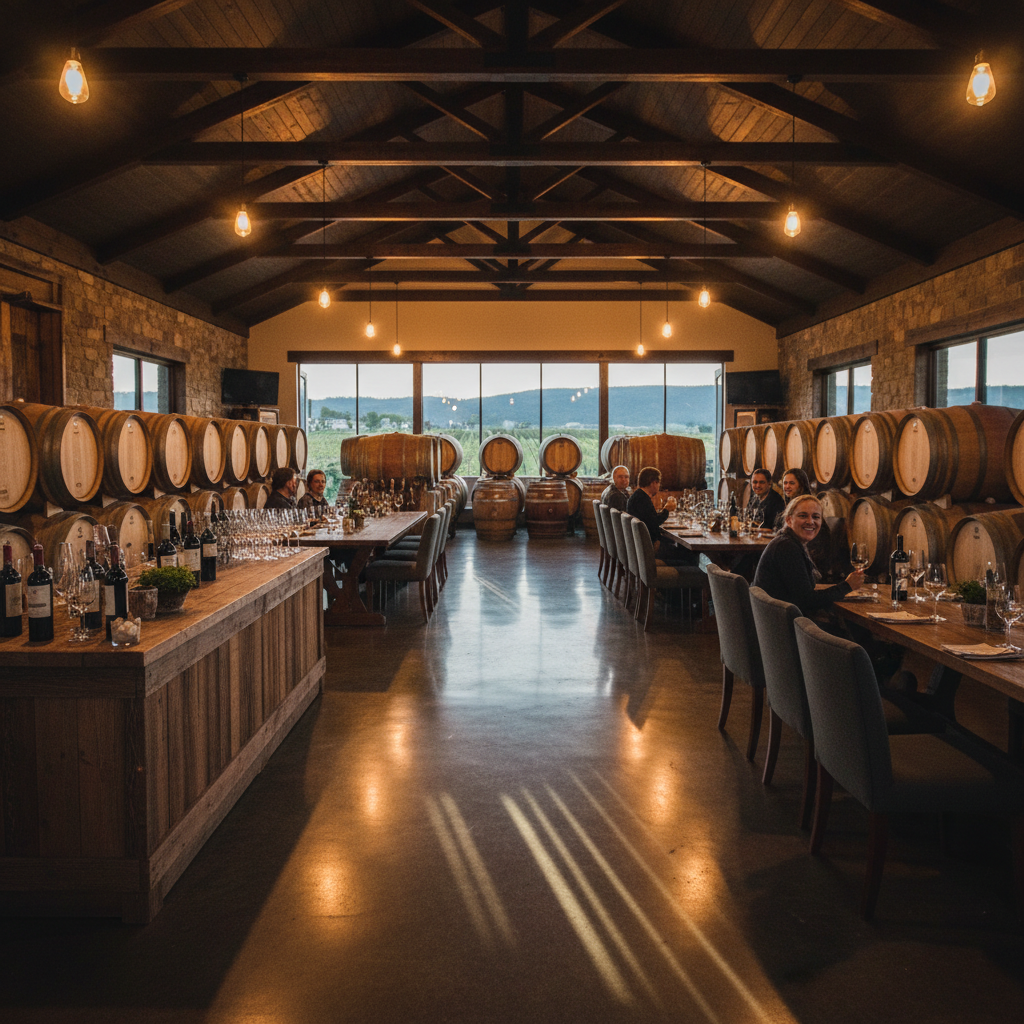
Where the wine meets the floor.
Rural restaurants and vineyard tasting rooms need a floor that photographs well and cleans up after a spilled Cab. High-gloss polished concrete does both.
47 commercial pours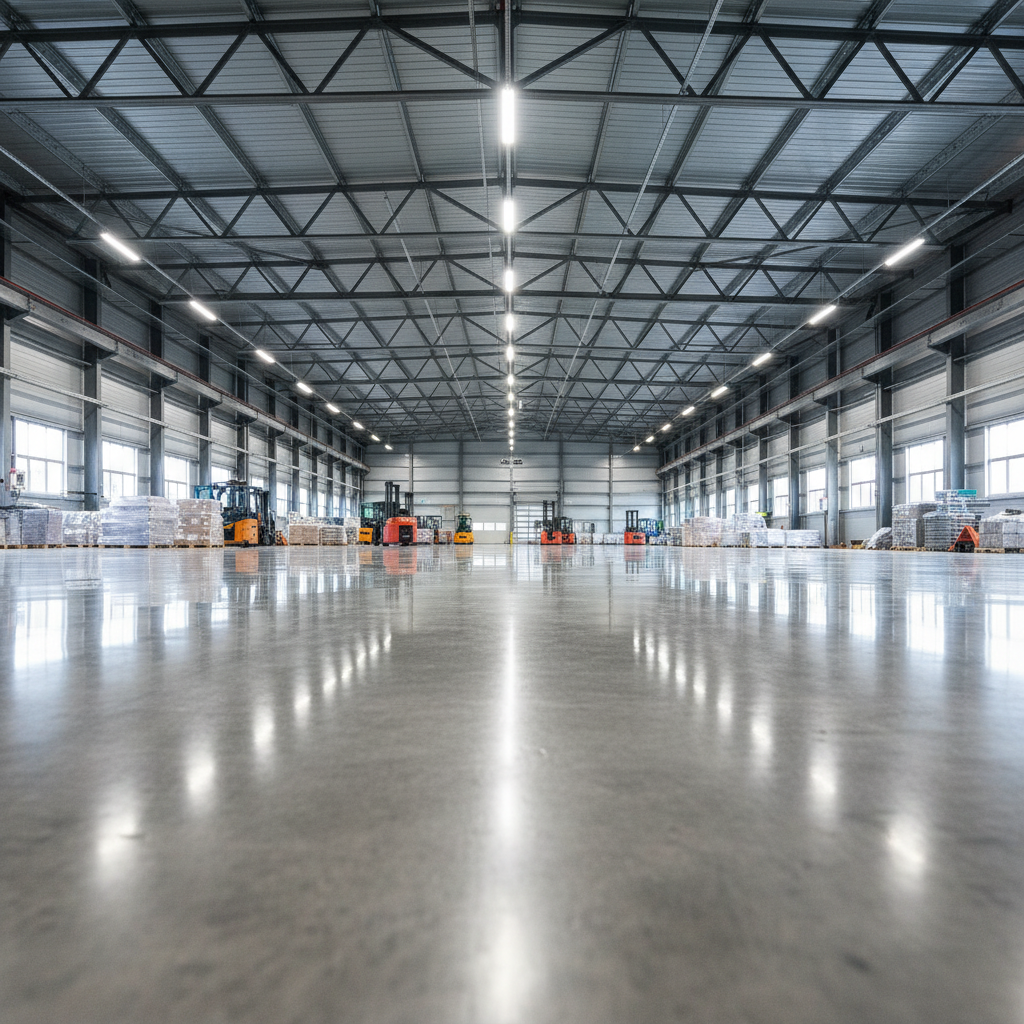
Industrial-grade, farmstead-ready.
Workshop floors, equipment storage, processing facilities — polished concrete resists forklift traffic, chemical spills, and the kind of abuse that destroys coatings in a season.
68 sq ft per hourFrom the Field
Real floors.
Real people.
I've had tile, epoxy, and wood in working farm buildings. This is the first floor I've ever had that actually improves with age. Three years of tractor tires and horse hooves and it still looks like glass.

Marcus Hollenbeck
Hobby farmer & Airbnb host · Staunton, VA
The calculator said $3,200–$4,800 for our kitchen. Final invoice was $4,100. That kind of straight-shooting is rare in any trade. The floor itself is something guests comment on every single visit.

Deanna Kowalczyk
Farmhouse B&B owner · Galena, IL
We poured a new slab over the old dairy parlor for our tasting room. Grind came in and turned something that looked like a parking lot into the most-photographed part of our whole operation.

Reuben Ashcraft
Vineyard & tasting room owner · Paso Robles, CA
Took the free 4×4 sample offer. Watched them do it in 45 minutes. Booked the whole 6,000-square-foot shop floor the next morning. Best decision I made for this building.

Tamsin Brouwer
Custom woodworking shop owner · Bozeman, MT
Instant Pricing
Get your floor
priced right now.
No sales call required. Enter your details and get a real ballpark range — the same numbers we'd quote on-site. Prices are per square foot, installed, with no hidden material charges.
Configure Your Job
How It Works
Enter your details
Square footage, current condition, and the finish level you want.
Get an instant range
A real ballpark — the same numbers we'd quote on-site. No fluff.
Lock the price
Book a start date and lock your estimate for 30 days.
Prices are per square foot, fully installed. No hidden material charges, no travel fees within 120 miles of Staunton, VA.